
Hungry? Five European Brands That Are Good for What You Eat (and Much More)
BCause what ends up in your cart and eat says something precise about how you see the world.
Let's talk about Food — possibly the least glamorous topic there is, and yet the one where ethical choices carry the most weight. Because they repeat every week, every month, for life.
Actually, for the same reason, these choices are the more likely to make an impact!
So here it is where we can building habits that hold up even when nobody's watching.
There are European brands that have been working on this for decades — not as a marketing position, but as an actual business model.
Five of them, in particular, deserve a place on the radar of anyone who cares about what they eat and what they support by buying it.
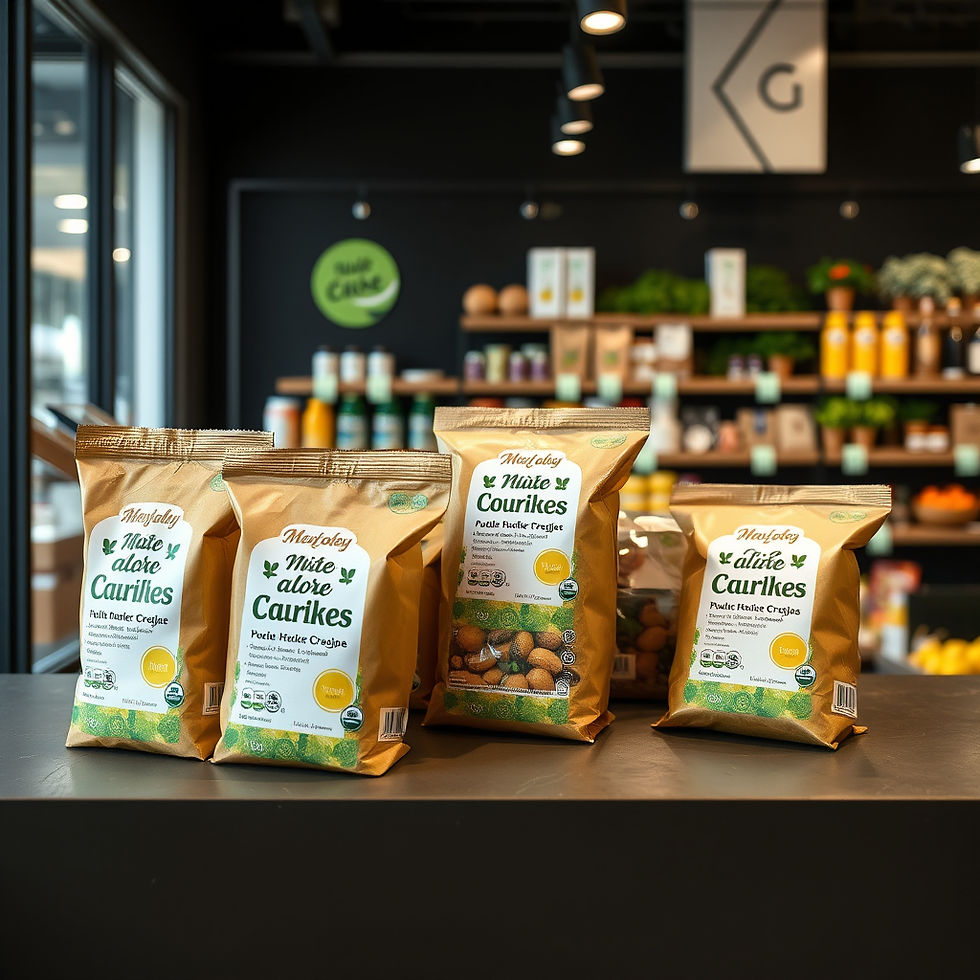
KoRo - Bulk logic, done right
The founding idea is almost as simple as it is radical: cut out the middlemen, sell online in large formats, keep prices honest, and declare the origin of every single product.
That's KoRo - started in Berlin in 2014, and in ten years it's become one of the most relevant food brands in Europe, with 1.7 million customers across seventeen countries.
92% of products are vegan, 55% organic.
But what really sets KoRo apart isn't just the composition of the catalogue - it's the transparency with which it's managed.
Every product page lists provenance, processing method, and the reason why that particular supplier was chosen.
No vague promises. Concrete data, verifiable, kept up to date.
In 2024, KoRo obtained B Corp certification with a score of 91.1 and they are also one of the larger companies here, and at that scale, staying consistent is actual work.
If knowing what you're buying - genuinely, not just from reading a supermarket label - matters to you, KoRo is probably the most accessible starting point → Discover KoRo products
Alce Nero — Italian organic that existed before it became a trend
In 1978, in Emilia-Romagna, a group of farmers decided to grow without synthetic chemistry. Not for profit or marketing but because they believed in it.
When Alce Nero was founded, organic wasn't yet a shelf category: it was a countercultural choice.
Forty-seven years later, that cooperative counts over a thousand producers across Italy and Latin America, 334 entirely organic products, 32 Fairtrade certifications, and a governance structure unusual for the sector: the board of directors is composed primarily of the producers themselves. 62% of raw materials come from Italy.
Products are exported to Japan, Brazil, and over fifty countries.
The company publishes a GRI-standard sustainability report and applies blockchain to select supply chains for full traceability.
In a market where organic is increasingly being acquired by funds and multinationals, Alce Nero remains independent and in the hands of the people who actually farm.
If short supply chains, Italian organic farming, and fair trade with producers in the Global South are values you hold, there's no more consistent brand to start with → Discover Alce Nero products
Tony's Chocolonely - A chocolate bar as an argument
Teun van de Keuken was a Dutch journalist when he discovered that the cocoa supply chain was rife with child and forced labour - and that the major chocolate companies knew about it and did nothing.
His response was to start a brand. The name, Chocolonely, comes from the fact that at first it really was just him.
Today Tony's Chocolonely is a company worth hundreds of millions, present in over forty countries, with a business model built entirely around a stated objective: making the cocoa trade 100% slavery-free. The bars are divided into uneven pieces - not for aesthetics, but to illustrate that the distribution of value in the supply chain isn't fair. Every year they publish a report measuring how close they've gotten to the goal, and how far they still have to go.
Traceability is complete. Cooperatives in Ghana and Côte d'Ivoire are paid at premiums above market rates.
The company has a legally binding mission statement that prevents future shareholders from deviating from the model.
If fair labour in the food supply chain - including the distant, invisible ones - is something you can't look away from, Tony's is the brand that turns every purchase into a precise act.
Alpro - Plant-based European, from long before it was fashionable
When Alpro began producing soy drinks, the plant-based milk alternatives market didn't yet exist as a recognisable category.
It was 1980, in Ghent, and the company started as a division of Belgian group Vandemoortele with a straightforward idea: there are people who can't or don't want to consume dairy, and they deserve products just as good as everyone else's.
Forty-five years later, Alpro is the most widely present plant-based brand in European kitchens - and one of the few in this sector with a sustainability history that predates by decades the moment sustainability became a marketing argument. The soy used in their products is mostly grown in Europe, certified ProTerra - a standard that guarantees zero deforestation, full traceability from seed to production site, and no GMOs. Their four production sites run on 100% renewable electricity. Between 2010 and 2021, they reduced operational emissions by 34% and water use by 29%.
B Corp certification arrived in 2018 with a score of 87, rising to 127.9 at the subsequent renewal - progress B Lab described as moving from "great" to "outstanding".
In 2016, Alpro entered Danone's orbit: a large multinational, with everything that entails. Worth knowing, as with any brand at that scale.
If you're looking for a daily plant-based alternative — milk, yogurt, cream — with verifiable European roots and a transparent agricultural supply chain, Alpro is the most established reference point on the market.→ Discover Alpro products
Alter Eco - Fair trade as the only possible model
In 1998 Tristan Lecomte founded Alter Eco in Paris with an idea that felt niche at the time: build food supply chains where producers in developing countries receive genuinely fair compensation - not as a concession, but as a non-negotiable condition of doing business.
Today Alter Eco works with 16,000 small farmers organised into cooperatives, certified Fair for Life - one of the most rigorous fair trade standards in the world. All products are organic, non-GMO, and wrapped in compostable or recyclable packaging. In 2012 they launched the first compostable chocolate truffle wrapper in history. Their B Corp score is 157.1 - among the highest in the food sector globally.
The operational headquarters is now in the United States, but the origin, values, and much of the supply chain remain deeply European.
Every purchase directly generates income for the cooperatives - the structure was designed for that, not to optimise it away as the company scales.
If fair trade is for you not a label to glance at but an economic model to believe in, Alter Eco takes it more seriously than anyone else on this list → Discover Alter Eco products
Finding the right brand for your values, every time
These five brands have very different histories and scales. What they have in common is one thing: they built the product around the values, not the other way around.
The certifications were in the original design.
Finding them takes time. And comparing certifications, scores, and supply chains isn't simple when you don't know where to look.
ChooseBCause was built for exactly this: an app that lets you discover and compare ethical European brands based on the values that matter to you — organic, fair labour, environment, animal welfare, circular economy, and much more.
Every score is based on certifications verified by independent third-party bodies.
Just brands worth believing in.
Some links in this article are affiliate links. If you purchase through them, ChooseBCause receives a small commission — at no additional cost to you. We only select brands we genuinely believe in.

Comments